

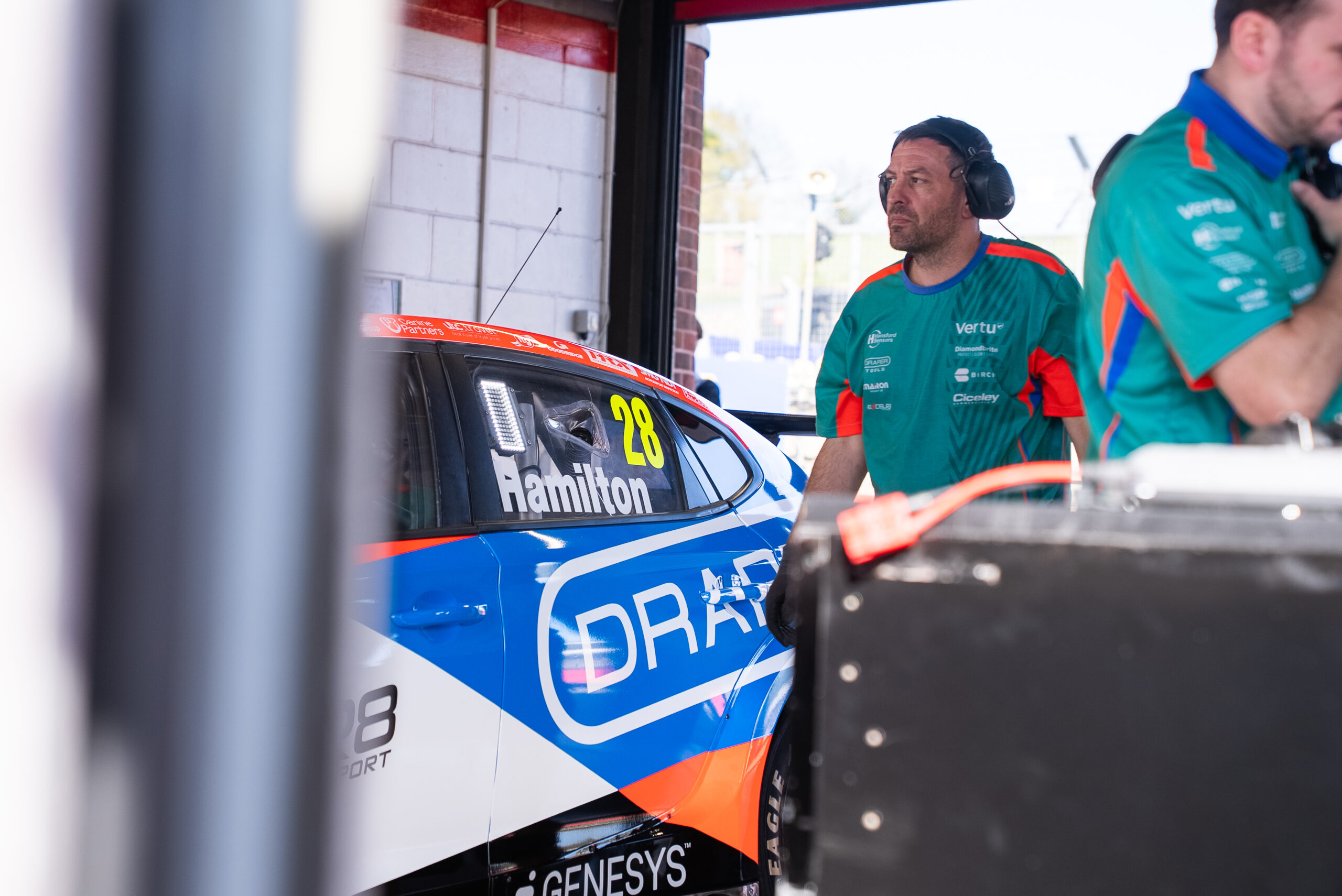
Spotlight: What Does a BTCC Technician do?
In the British Touring Car Championship, work behind the scenes often determines whether a team will be successful. This means teams rely on a group of highly skilled Technicians and engineers to prepare car in the workshop and carry out rapid repairs during race weekends. Without their expertise, organisation and quick thinking, a team’s weekend can quickly unravel.
In this blog we look at what a BTCC mechanic does, the qualifications needed to work in the paddock and what goes into preparing and maintaining modern touring cars throughout the season.
What qualifications are required to work on a BTCC car?
To work on a BTCC car, Technicians must have a good understanding of vehicle systems, mechanical engineering, and motorsport technology. Often, they study qualifications such as NVQs, BTECs or apprenticeships in vehicle maintenance, and repair before moving into motorsport-specific roles.
After obtaining those qualifications, many Technicians also study motorsport engineering at college or university. This allows them to gain experience in areas race car setup, data analytics, fabrication, and vehicle dynamics. However, it still doesn’t replace hands-on experience. That is why many aspiring BTCC Technicians work in junior categories, karting teams, or trackside support roles to build up practical knowledge.
Even though working on a road car and a BTCC can appear similar, it is in fact very different. Road cars are designed for reliability and comfort whereas a BTCC car is engineered for performance. This means every component is pushed to its limit, so, Technicians must work to much finer tolerances and inspect parts more frequently.
Moreover, BTCC Technicians work with specialist parts that aren’t found on road cars. Suspension geometry, aerodynamic balance, brake cooling, and tyre management all play a major role in performance. As a result, even the smallest adjustments can result in changing the car’s behaviour on track.
The working environment is faster paced. In a road car workshop, repairs may take several hours or even days. In touring car racing, Technicians are often expected to diagnose problems and complete repairs within minutes while working under the pressure of a live race weekend.
What does a BTCC mechanic do before a race?
Preparing for BTCC events starts long before teams get to the track. Back at the workshop, Technicians strip and rebuild cars between race weekends to ensure every component operates as intended. Engines, transmissions, suspensions, and brakes are inspected for damage and wear with many parts being replaced as a preventative measure.
However, it is before the season that the workload is most intense. Teams spend months preparing brand-new or rebuilt cars for the opening round, so they must check and test every system. Technicians will also work with the engineers to establish a baseline setup for the different circuits on the calendar.
Every track presents a different challenge, so Technicians are called upon to make setup changes. Some circuits demand higher straight-line speed, while others prioritise braking stability or traction through slower corners.
As a result, BTCC Technicians must work closely with race engineers. They adjust the car based on engineering data, driver feedback, and setup strategy. Therefore, communication between both roles is key, even a small change to suspension settings, tyre pressure, or ride height can alter how the car performs.
Before the cars head out onto the track, they must complete extensive checks that cover everything from wheel alignment and fluid levels to electrical systems and safety equipment. Every detail matters, because a minor issue can quickly become a race-ending problem once the car is at full speed.
What does a BTCC Technician do during a race weekend?
A BTCC race weekends operates around a busy schedule which means Technicians have very little downtime once the cars get to the circuit. Once the team has built the garage, they must prepare cars for the practice sessions, qualifying, and the three races that make up the event.
During practice, Technicians monitor the cars closely as engineers collect data and drivers provide feedback about handling and balance. Once the car returns to the garage, mechanics immediately make adjustments based on the information gathered on track. This can include altering suspension settings, changing dampers, adjusting ride height, or replacing tyres and brake components.
Qualifying becomes even more intense, as teams work to maximise performance over one lap. Between sessions, Technicians often have only a short window to complete setup changes before the car heads back onto the circuit.
When a crash occurs, the pressure increases because BTCC Technicians must complete repairs under a strict time limit. Depending on the severity of the damage, the team may only have a few hours to rebuild major sections of the car. In some cases, Technicians can replace suspension corners, bodywork, or steering components in remarkably short periods to get the driver back onto the grid.
During a race weekend, some of the most common repairs involve fixing damaged suspension parts, brake components, wheel hubs and body panels following contact between cars. Touring car racing is notoriously competitive, so minor collisions are a regular part of the championship.
Changing the car’s setup during a race weekend requires a lot of coordination. Adjustments to anti-roll bars, spring rates, tyre pressures, or aerodynamic balance can all influence the car’s performance. And these are tasks Technicians must quickly and accurately while ensuring the car remains safe and complies with championship regulations.
Ultimately, BTCC Technicians are responsible for keeping the car competitive, reliable and race-ready throughout the entire weekend. Their work combines technical expertise, teamwork, and the ability to perform under constant pressure, making them one of the most important parts of any successful touring car team.