

MEMORIES OF SILVERSTONE
The British Touring Car Championship reaches Silverstone this weekend for the ninth race weekend of the 2026 season. The campaign is now well into its closing stages, and every point on offer from here carries added significance for the fight ahead.
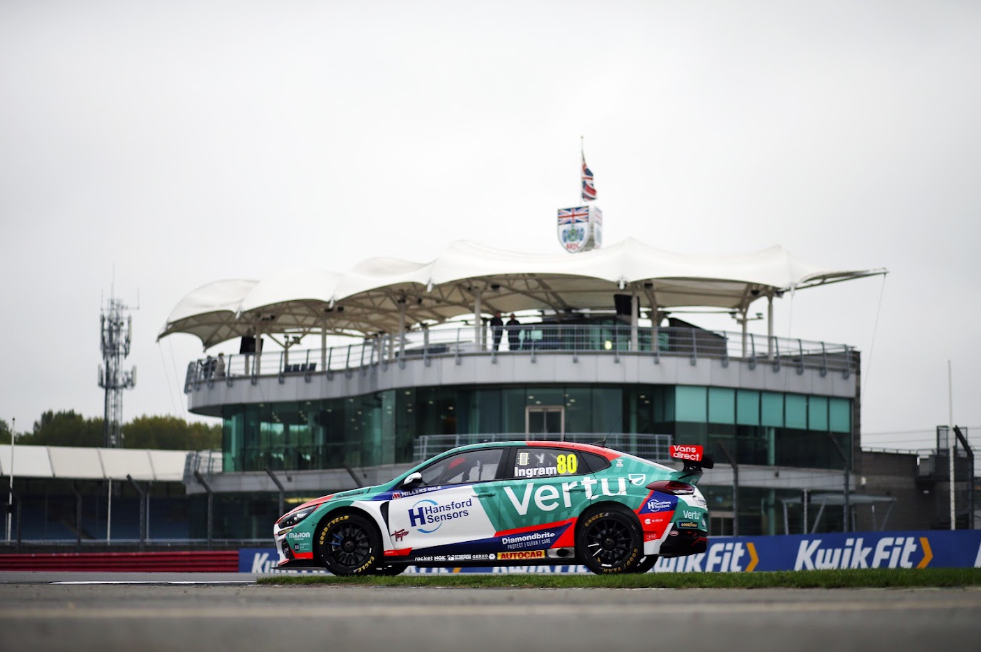
EXCELR8 Motorsport arrives on the back of a mixed weekend at Croft. The three podium finishes were banked across the three races, a solid return by any measure, yet there was still a sense that more was left on the table. Tom Ingram delivered a strong Race One result, while Tom Chilton rounded out the weekend with a podium in Race Three. Together, those results pointed to a team with real pace, even if the full reward from that speed didn’t quite come together across all three races.
Silverstone also brings a change to EXCELR8 Motorsport’s line-up. Osamu Kawashima steps in for Ricky Collard for the final two rounds of the season, taking his seat in the car at one of the most historic venues in British motorsport.
Few circuits carry the weight of history that Silverstone does. Long before the BTCC ever turned a wheel there, the venue had already secured its place in the story of world motorsport. This weekend, we take a look at that history and explain what makes the Silverstone National layout such a distinctive test for touring cars. We’ll also set out what fans should be watching for as EXCELR8 Motorsport begins a new chapter with Kawashima behind the wheel.
It’s worth clarifying from the start that the BTCC doesn’t share a lap with Formula 1 at Silverstone. The National Circuit used by the BTCC is a different proposition entirely from the Grand Prix layout, and that distinction shapes everything about the weekend ahead.
Silverstone: from airfield to motorsport icon
The origins of Silverstone
Like many of Britain’s great racing venues, Silverstone started out as an airfield rather than a racetrack. Built for the Royal Air Force during the Second World War, the site trained bomber crews before falling quiet once the fighting ended. Its runways and perimeter roads later proved ideal for motor racing, and it wasn’t long before the site found a new purpose.
The first Grand Prix took place at Silverstone in 1948. Two years later, the circuit earned a permanent place in the history books when it hosted the opening round of the Formula 1 World Championship in 1950. That milestone alone secured Silverstone’s legacy, and the venue has continued to change and grow in the decades since, keeping it at the heart of world motorsport to this day.
A circuit full of memories
Few venues hold quite the same place in the hearts of British motorsport fans. Silverstone’s layout has shifted many times over the years, and each version has brought its own particular challenge, testing generations of drivers in different ways. Countless championships have called the circuit home, and the roll call of drivers who have raced there reads like a history of the sport itself.
The BTCC has long been part of that story too, with Silverstone producing its own share of memorable weekends across the years. That history adds extra weight to this year’s visit, particularly given what it means for EXCELR8 Motorsport.
The Silverstone National Circuit explained
While the British Grand Prix uses Silverstone’s full Grand Prix layout, the BTCC races on the shorter National Circuit. Fans who know Silverstone mainly through Formula 1 coverage are often surprised by how different the National layout looks and feels. It’s tighter, more compact, and asks for a different approach behind the wheel.
That compact nature is exactly what makes it such good ground for close racing. With less space to find clear air, cars tend to run in tighter groups, keeping the battles for position never far away.
Wellington Straight and Brooklands
The Wellington Straight gives drivers a brief moment to reset before one of the most important braking zones on the lap. The approach into Brooklands is where much of the weekend’s action is likely to unfold. Heavy braking here creates a genuine chance for a well-timed move.
Getting the car settled under braking is essential. Carry too much speed and a driver runs the risk of going wide or losing ground on exit. Brake too early, and the car behind can use the slipstream to snatch the position. It’s a corner that rewards precision and punishes hesitation in equal measure.
Luffield
Luffield is one of the defining features of the National Circuit. It’s a long, sweeping corner that asks drivers to carry as much speed through it as they dare. Getting that balance right has a knock-on effect for the rest of the lap. Carry good momentum through Luffield, and a driver sets up the following section nicely. Lose it, and that time is very hard to find back.
Following another car closely through Luffield adds a further layer of difficulty, with dirty air and a compromised line making it harder still to hold the ideal speed through the corner.
Woodcote and the run to the line
The final section of the lap brings its own demands. A clean, well-judged exit through Woodcote is essential for carrying maximum speed onto the National Pit Straight. Even so, the finish line rarely brings a moment’s rest. In racing this close, the end of one lap simply marks the start of the next battle for position.
Why the BTCC Silverstone lap is different from F1
It’s a point worth clarifying, since it’s easy to assume the BTCC tackles the same lap seen during the British Grand Prix. It doesn’t.
Corners like Copse, Maggotts, Becketts and Stowe, so familiar from Formula 1 coverage, play no part in the BTCC’s National Circuit lap. Where the Grand Prix layout is long, flowing and built for high average speeds, the National Circuit is short, sharp and far more compact.
That difference changes the entire nature of the challenge. Rather than the sweeping, high-speed sequences that define the Grand Prix lap, the National Circuit puts the emphasis on braking precision, mechanical grip through the corners, and making the most of every metre of straight-line acceleration. It’s a different test altogether, and one that suits the BTCC’s close style of racing well.
What makes Silverstone such a challenge for BTCC drivers?
Getting the braking zones right
The braking zone into Brooklands places real demands on both car and driver. With touring cars racing so closely together, there’s very little room for error. Run in too hot, and a driver risks running wide and handing the position straight back. Misjudge the braking point the other way, and the chance to attack disappears before it arrives.
Maintaining momentum
Carrying speed through Luffield is one of the defining skills required around the National Circuit. Even a small loss of momentum there can affect the section that follows. Drivers need to strike the right balance between attacking the corner and looking after their tyres across the full race distance.
Qualifying matters
Track position carries real value on a short, compact circuit like this. With the field so closely matched, overtaking is possible but never easy, which puts real weight on a strong qualifying performance. With three races across the weekend, though, drivers also need to look beyond the immediate result and think about how one race shapes the next.
Silverstone memories: a new chapter for EXCELR8 Motorsport
This weekend marks Osamu Kawashima’s BTCC debut, and few venues could suit his first appearance in the championship better.
From Ricky Collard to Osamu Kawashima
Ricky Collard’s contribution to EXCELR8 Motorsport’s 2026 campaign deserves real credit. He put together a strong season, including podium finishes, before making his final appearance for the team at Croft. As the team turns the page at Silverstone, Kawashima steps into the car for the final two rounds of the season, at Silverstone and Brands Hatch.
Rather than dwelling on the circumstances behind the change, this weekend is best seen as the start of something new. Kawashima arrives with an existing connection to EXCELR8 Motorsport, having served as a test and reserve driver, giving him a useful foundation as he takes his opportunity in the championship.
A piece of BTCC history
There’s a deeper story here too. Kawashima’s debut carries an unmistakable link back to 1985, when Kunimitsu Takahashi made his own BTCC appearance at Silverstone. With his debut coming at the same circuit, Kawashima becomes the first Japanese driver to compete in the championship since Takahashi, more than four decades on.
That connection gives this weekend added significance. Silverstone becomes the thread linking two different generations of Japanese involvement in British touring car racing, a fitting theme for a venue built on memories.
What should BTCC fans watch for at Silverstone?
Osamu Kawashima’s debut
Arriving in the BTCC for the first time with just two rounds of the season remaining is no small task. Kawashima can draw on his previous experience with the team and his familiarity with the Hyundai, but there’s still plenty to learn. That includes adapting to the intensity of a three-race weekend and finding more from both car and circuit as the sessions progress.
Tom Ingram’s response to Croft
Croft left Tom Ingram with reason for frustration despite strong pace and a podium finish. Silverstone offers another chance to turn that speed into valuable points. His experience of the National Circuit and its particular demands should serve him well across the weekend.
Tom Chilton’s Croft momentum
Tom Chilton arrives at Silverstone carrying the momentum of his Race Three podium at Croft. As one of the more experienced heads in the field, his focus will be on consistency, sharp racecraft and making the most of the chances that come his way in close BTCC battles.
Nicolas Hamilton’s progress
Nicolas Hamilton showed continued progress through the Croft weekend, particularly in the dry conditions of Race Three. Another familiar circuit gives him the chance to build further on that form, with the focus firmly on development and getting more from the remaining races of the season.
Three races, three opportunities
The BTCC’s three-race format means Silverstone offers three separate chances to score points. The outcome of one race can shape the approach to the next. A strong qualifying session sets the tone, but how a team handles Race One, and what it learns and adjusts before the next start, can matter just as much as outright pace.
Consistency across the full weekend is often just as valuable as a single standout result, and that’s exactly what Team VERTU will be targeting as it looks to close out the penultimate meeting of the season on a high.
A fitting stage for the next chapter
Silverstone’s story is one of transformation, from a wartime airfield to one of the most iconic venues in world motorsport. That story continues to be written every time the paddock passes through its gates. The National Circuit may be a world away from the layout Grand Prix fans know best, but it offers its own distinctive test, built on braking precision, momentum and the value of track position.
For EXCELR8 Motorsport, this weekend marks the start of something new. Osamu Kawashima’s BTCC debut, arriving at the very circuit where Kunimitsu Takahashi once raced back in 1985, adds a genuine sense of history to the occasion. With the positives of Croft to build on and the frustrations of that weekend left behind the team heads to Silverstone with three races and three fresh opportunities ahead. If there’s one thing this circuit has proven time and again, it’s a habit of creating memories worth holding on to.